Be yourself; Everyone else is already taken.
— Oscar Wilde.
This is the first post on my new blog. I’m just getting this new blog going, so stay tuned for more. Subscribe below to get notified when I post new updates.
Be yourself; Everyone else is already taken.
— Oscar Wilde.
This is the first post on my new blog. I’m just getting this new blog going, so stay tuned for more. Subscribe below to get notified when I post new updates.
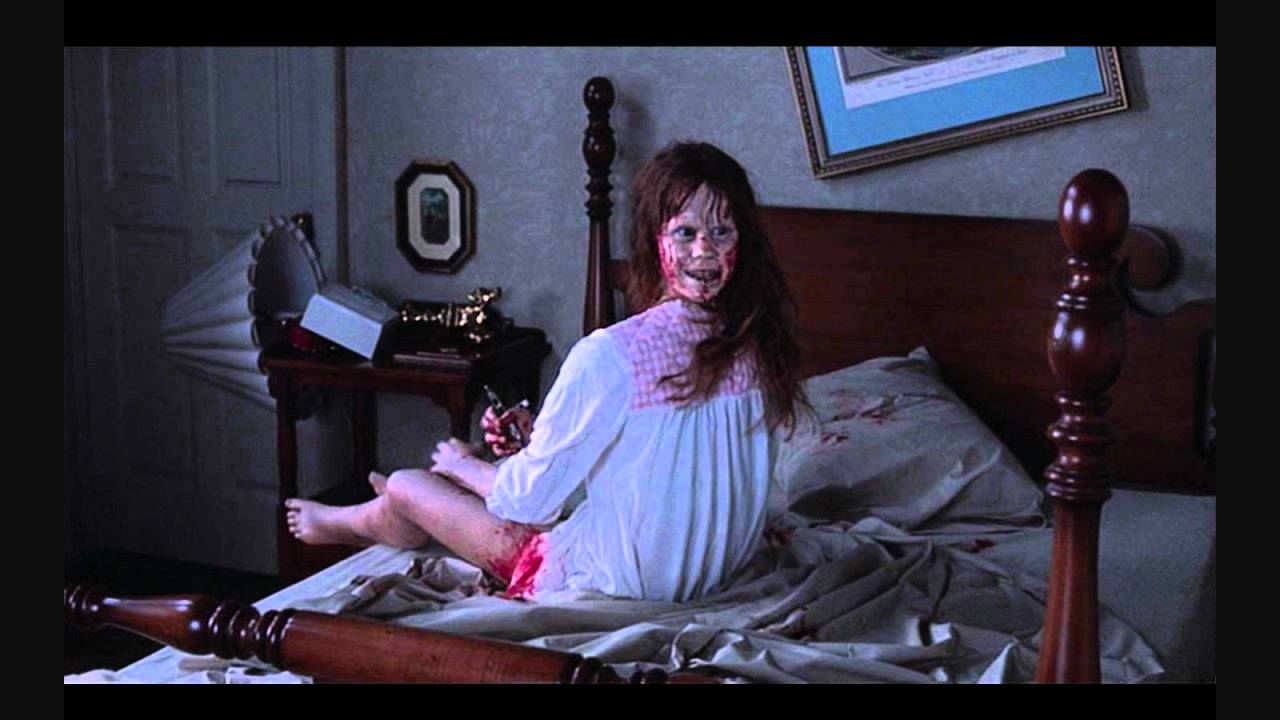
The classic 1973 film, The Exorcist, has been known to be an incredibly terrifying horror movie. With its vivid images of the supernatural world of terror, it portrays how awful the human female can be. It also introduces a “…third way in which the horror film illustrates the work of abjection refers to the construction of the maternal figure as abject.” (Creed 43). Just like Carrie, the female character is displayed as monstrous and terrifying in these classic horror films.
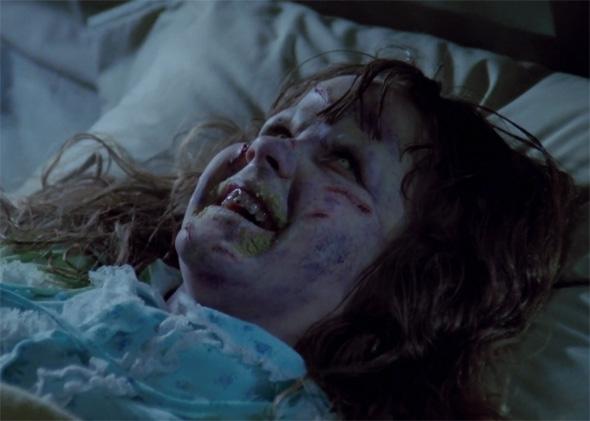
Just like the film Carrie, the “feminine horror” is shown throughout the film and in both cases, some outside “force” caused by both Carrie and Regan is portrayed through the journey toward another terrifying experience. However, unlike Regan, Carrie has powers that are developed during the shower scene where her classmates (that were girls) were teasing her for getting her period for the first time. The result had been catastrophic, she used her telekinetic powers by shattering a light bulb which had not been that bad, but in the end of the movie her powers became a weapon. In Regan’s case, it had been when shew as playing with a Ouija board and contacting a spirit named “Captain Howdy”. From then on, Regan had been possessed and this so called Captain Howdy had actually turned out to be a demon named Pazuzu, which is based on the Assyrian and Babylonian mythology. Pazuzu is the king of the demons of the wind, and had taken over Regan’s body and mind. As the demon’s strength becomes more inevitable and stronger, her condition (as a human being) had begun to get worse and worse as the film goes on. For example, she descends down the stairs in Chris’s party and tells the astronaut (one of the guests) that he will die in space and begins to urinate on the floor. Regan then continues to show her massive strength, which goes to show how terrifying girls can be. This also relates to what Barbara Creed had written in her article, “Images of blood, vomit, pus, shit, and so forth, are central to our culturally/socially construction notions of the horrific. They signify a split between two orders: the maternal authority and the law of the father. On the one hand, these images of bodily wastes threaten a subject that is already constituted, in relation to the symbolic, as ‘whole and proper.’ Consequently, they fill the subject – both the protagonist in the text and the spectator in the cinema- with disgust and loathing.” (Creed 45)
As the film goes on, Regan begins to deteriorate as Pazuzu begins to grow stronger and stronger. Pazuzu seemingly, draws the life out of Regan and takes over her entire body. She becomes physically and mentally demonic, as her skin begins to turn a ghostly white and covered in lesions and cuts while her eyes turn yellow and throws up a bright green liquid. Not only that, her voice becomes the demon itself, with its deep and terrifying tone which is unfamiliar to Regan’s mother.
A common factor between both Carrie and The Exorcist, is the sexual visualizations that are portrayed throughout the films. For instance, in Carrie, they show the girls naked in the showers and in The Exorcist, the possessed Regan starts to curse out many profanities, and in one scene she is seen ramming a crucifix into her vagina violently to which she begins to bleed. A truly horrific scene, especially to the audience it would be disgusting to watch this. This shows how woman are displayed as sexual and horrible.
Films like Carrie, carry a theme that introduces supernatural powers with the protagonist and the impact it has on the other characters. Familial and familiar relations are shown throughout the film as well as the horror that is portrayed.
In the start of the film, the audience can see her first appearance of her supernatural powers occur in the girls locker room. As she was taking a shower, she happens to get her period for the very first time. Carrie, screaming and crying for help, the girls in her class had taunted her and were throwing feminine products at her. Soon after this, she develops telekinesis power and destroys a light that was in the locker room. With these so called powers that developed when she reached “womanhood”, she is viewed as a monster within her femininity. The characters in the film see her as a monster because with her powers she uses it to do harm instead of positively impacting them. Some of the audience may even see her “monstrous” ways of handling unfortunate situations as “bad”, others are able to see it as a way for Carrie to rebel and fight against her oppression.
In the article it discusses Carrie to be shown to display familial relations, along with her supernatural powers. In the film, her mother is a very religious and spiritual person that believes that Carrie has done something wrong (since she gets her period for the first time) and makes her go into her closet to force her to pray. What had made Carrie’s mother so upset could be many different things; one could be the fact that Carrie had her period for the first time and her mother (among others) believe that when a woman is going through her menstrual cycle, her body is polluted with evil. Or she was having sexual intercourse and that Carrie’s body was possessed with “evil” spirits.
Many other films like Carrie, femininity can be seen as monstrous. The horror of the feminine body can be depicted in many different ways to the audience, what seems to be a normal bodily function can be seen as horrifying to some viewers.


In most horror films, the female protagonist known as the “final girl” is the only character in the movie to be fully developed in psychological detail. The “final girl”, most of the time, is the last one to make it to the end of the film involving some sort of fight with the antagonist. This character goes through many excruciating events, which in turn, ends up leading to a fight with the killer (the killer tends to be male). One of the most prominent examples of the “final girl” is Sydney Prescott in the film, Scream, directed by Wes Craven.
Sidney, is written to be more responsible, intelligent, and a brave character, however, her friends are interpreted as more of “party animals” and care more about their alcohol intake than their education. Out of all of her friends, Sidney, is a virgin but what happens later in the film changes that fact. In most horror genre films, the virgins tend to survive till the end of the movie, whereas those who take part in sexual behavior end in a tragic death.
It is also apparent to the audience that although Sidney was attacked throughout the entire movie, she does not die (most likely because she is the virgin in the film). However, towards the end of the movie, she loses her virginity and the killer comes up with the plan to really killer her this time. This does not just happen in Scream, other movies like Halloween, the “final girl” makes it to the end of the movie as well because she is a virgin. In unfortunate circumstances, like Scream, all of her friends are murdered because of their promiscuous ways.
Throughout the film, Sidney faces many dangerous encounters with the killer, but what keeps her alive is her fighting abilities and quick thinking. To the male audience, this can be seen as a female with male characteristics, but to the female audience they see a girl with quick instincts and fighting skills. In an abundant amount of horror films, the females are seen as weak and tend to cry, scream, or start panicking when the killer is in sight, but only the males are the ones to protect the females and fight the killer. This is why the male audience could view the “final girl” as male instead of female.
In most horror films, females are portrayed as having more fear and more panicky moments, however, movies that incorporate the “final girl” the female protagonist is ready to take down the killer with their male characteristics.


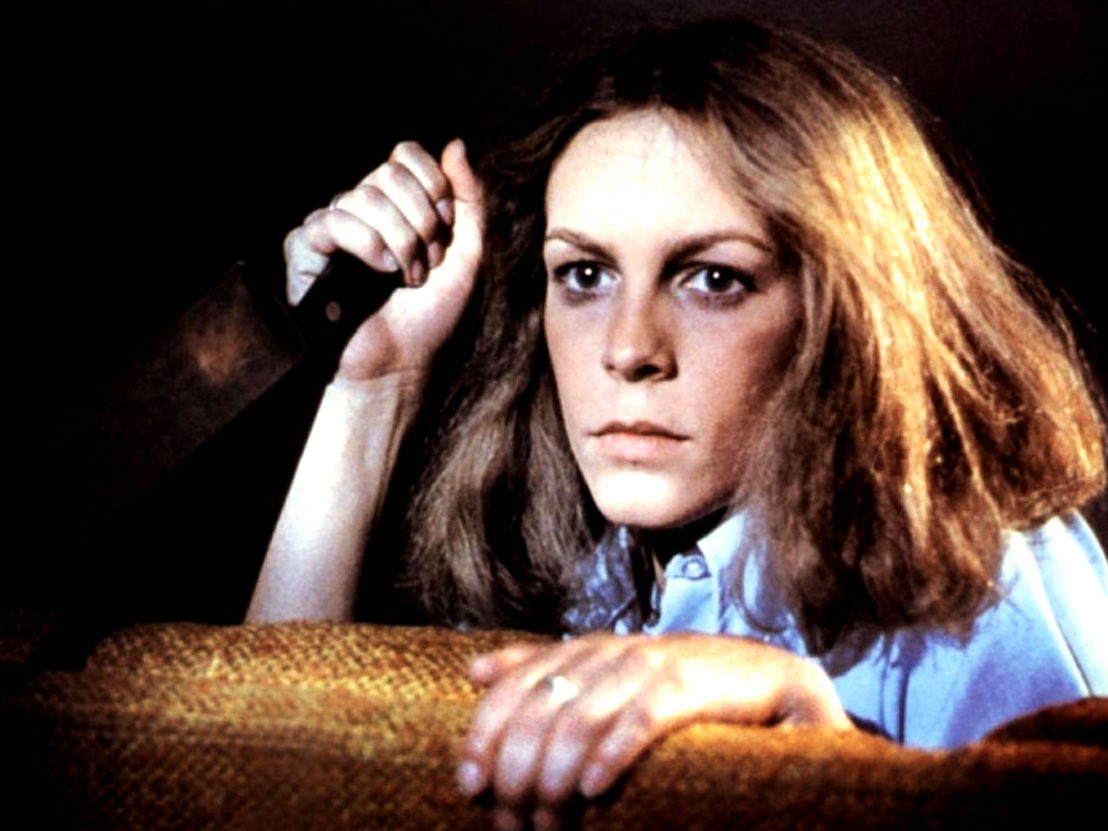
What is better to watch than an original slasher film, John Carpenter’s, Halloween. Throughout this movie, there are five key principles that are shown; the killer, the weapon, the “horrible place”, the final girl, and the shock factor. Mix all of them together to create one truly horrific plot.
The first principle in the film Halloween, the killer, happens to be Michael Myers. At six years old, Michael’s first murder happens on Halloween night 1963. The victim of Myers’s first kill had been his very own older sister, Judith. After just having intercourse with her boyfriend, Michael repeatedly stabs her, and the film goes on to show his parents coming home to find their son holding a knife that had just murdered his sister. From there, he is sent to an insane asylum where in 15 years he escapes and travels back to his home town Haddonfield, only to kill again. When he gets there, he breaks into a store to steal his white mask and a knife. Michael then wreaks havoc on his hometown on the same day that his first murdered took place, on Halloween. He takes prey on a girl named Laurie and her friends, most likely because she reminds him of his sister who he murdered in cold blood. Michael Myers fits perfectly to the typical slasher killer profile, a male that is dealing with his own psychotic issues.
A second principle is the weapon that is used, in Michael’s case, his killings are done with a large kitchen knife. However, in the film, Myers does kill Annie and Lynda by strangling them but his weapon of choice was a knife. His tendency to stab his victims is known as phallic symbolism. This means, his knife represents his penis. This in turn, could explain why he murdered his sister because of having some incestuous intentions towards her and later in the film towards Laurie and her friends. During the scene where Michael strangles Annie and Lynda, it also infers to a sexual symbol because choking someone can be seen as “kinky”.
The third principle of the slasher film is the location, which is sometimes referred to as the “horrible place”. Haddonfield represents this “horrible place” where Michael’s heinous murder sprees happen; he stabs his sister to death when he was only a child and then fast forward to present day where he returns to Haddonfield on Halloween night to “haunt” the town and to kill once again. To be more specific, Annie’s house is seen to also be the “horrible place” because, towards the end, that is where Laurie and Michael finally confront one another and have an epic fight. This is a more critical part of the film because there are many ways this movie could have ended.
The final girl is another key principle in slasher films. In Halloween, Laurie is the last one to survive Michael’s rampant murders, so for those who are slasher film fanatics she can be seen as being the final girl. The final girl tends to veer off from the cultural norm of the time period, and Laurie being very intelligent who does not seek male attention is considered “out of the norm”. The final girl tends to last long enough for help to arrive or she is left with no choice but to become the killer herself. Halloween proves itself to have one of the most suspenseful final fight with the killer and the final girl.
Last but not least, is the shock factor. The shock factor is the shock that comes with the drawn out murders of characters who do not play a significant role, however, are very significant to the film. These murders tend to be very gruesome and violent, and the audience is left sitting lost in ambiguity, wondering how the movie is going to end and to what they just witnessed. Halloween, with a tremendous open ending, leaves audiences open to ideas.
The five key principles ties together the slasher films, only to show a truly horrific and terrifying cinematic experience. John Carpenter’s Halloween portrays many horrifying twists and turns and has the audience leaving the movie theater awestruck.

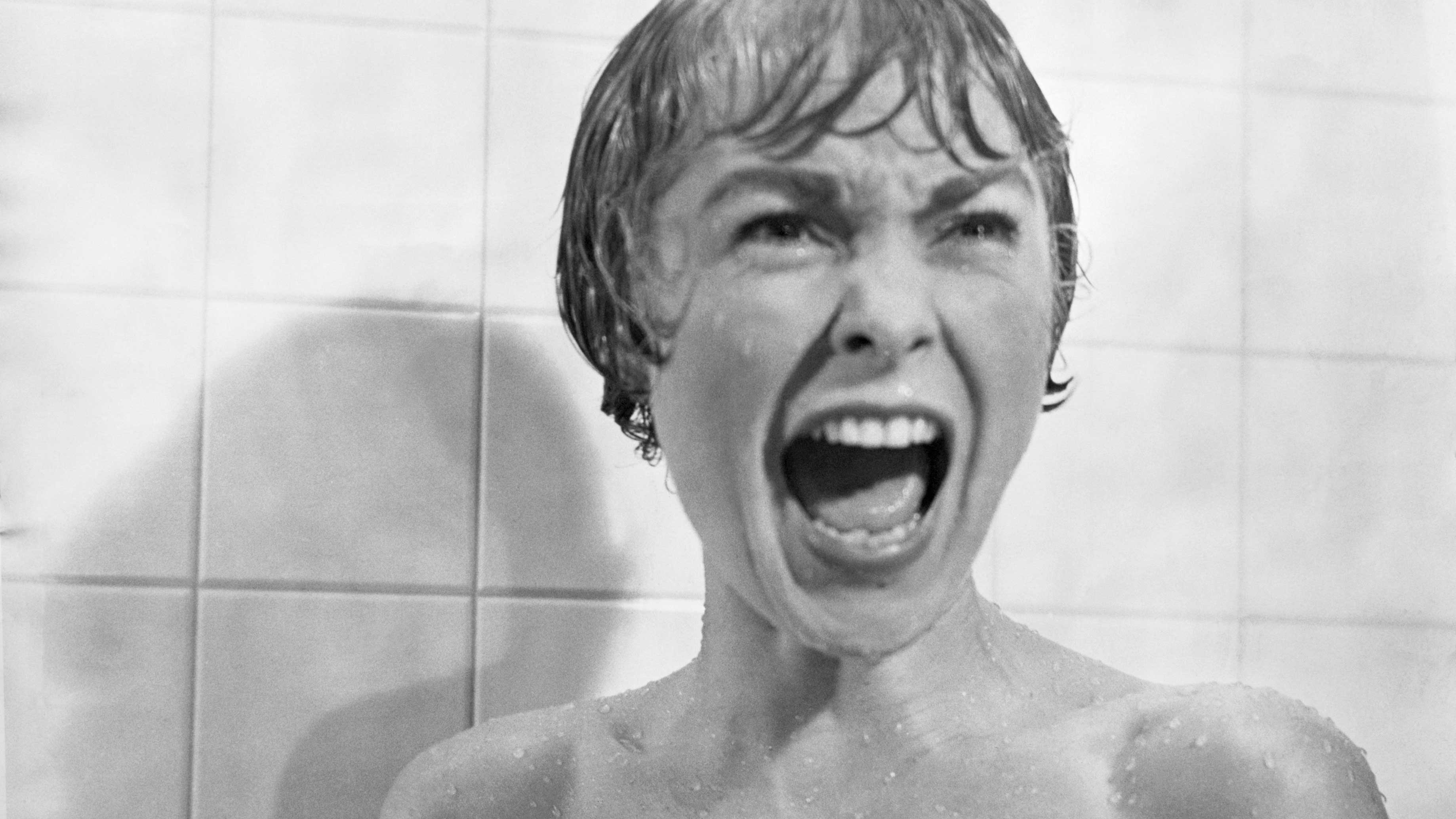
The 1960 film, Psycho by Alfred Hitchcock, is a classic slasher movie with many twists and turns. Littered with sexual visuals and an idea that women are less human or less than men. This film contains the five key principles: the killer, the weapon, the “horrible place”, the final girl, and the shock factor. All together, creates one truly horrific plot.
The first principle in Psycho, the killer, happens to be Norman Bates (or the “Mother” as it is shown towards the end of the movie that they are the same person). After the death of his father, Norman began to depend on his mother’s love and undivided attention. However, when his mother found a new lover, Norman felt that he was being replaced and the overwhelming jealousy lead him to poison his own mother and her lover. Since this was his first murder, he became so consumed with guilt that he stole his mother’s corpse and tried to preserve it as best as he could. To keep up with the illusion that his she was still alive, he began to walk around in her clothes and wore a wig, creating a split of his personality to be Norman but his mother as well. Norman Bates fits the typical slasher killer profile because of him being male that is dealing with his own psychotic issues.
A second principle is the weapon that is being used to harm others, which in Norman’s case, he uses a knife. His tendency to stab his victims can be seen as phallic symbolism. Which means, that his knife represents his penis. In one part of the film, Norman is looking through a peep hole to Marion’s room where she is seen naked. He then proceeds to go into her room and “penetrates” (stabs) her over and over again. The audience can see the murder as an extension of Norman’s desire.
The third principle of the slasher film is the location, which is often referred to as the “horrible place”. Hitchcock represents this “horrible place” where Norman’s heinous murders had happened, in the Bates Motel. This is also where his mother’s corpse still lies, and where all the murders that are done by Norman happen.
The final girl is another principle in many slasher films. Some would say in Psycho, Lila Crane is portrayed as the final girl because she is the last one that remains alive in the film. However, some critics would argue that she should not be considered the final girl because in the end of the film, Sam is seen as the hero who comes to save Lila before she is murdered by Bates. Another argument against Lila being the “final girl” is that the final girl tends to veer off from the cultural norm of the time period. In this movie, she is seen as another helpless girl who needs the rescue of a male figure. To counter these arguments, the final girl is known to last long enough for help to arrive or she has to become the killer herself and Lila Crane did in fact survive the brutality of Norman.
Last but not least, is the shock factor. The shock comes with the drawn out murders of characters who do not play a significant role, however, are significant to the movie. These murders tend to be very gruesome and violent, and the audience tends to be left sitting lost in ambiguity, wondering how the movie is going to end and what they just witnessed. Psycho, with a tremendous open ending, leaves the audience open to ideas.
These five key principles tie together the slasher films and provide a truly horrific and chilling cinematic experience. Alfred Hitchcock’s Psycho shows many horrifying twists and turns and has the audience leaving the movie theater awestruck.

This is an example post, originally published as part of Blogging University. Enroll in one of our ten programs, and start your blog right.
You’re going to publish a post today. Don’t worry about how your blog looks. Don’t worry if you haven’t given it a name yet, or you’re feeling overwhelmed. Just click the “New Post” button, and tell us why you’re here.
Why do this?
The post can be short or long, a personal intro to your life or a bloggy mission statement, a manifesto for the future or a simple outline of your the types of things you hope to publish.
To help you get started, here are a few questions:
You’re not locked into any of this; one of the wonderful things about blogs is how they constantly evolve as we learn, grow, and interact with one another — but it’s good to know where and why you started, and articulating your goals may just give you a few other post ideas.
Can’t think how to get started? Just write the first thing that pops into your head. Anne Lamott, author of a book on writing we love, says that you need to give yourself permission to write a “crappy first draft”. Anne makes a great point — just start writing, and worry about editing it later.
When you’re ready to publish, give your post three to five tags that describe your blog’s focus — writing, photography, fiction, parenting, food, cars, movies, sports, whatever. These tags will help others who care about your topics find you in the Reader. Make sure one of the tags is “zerotohero,” so other new bloggers can find you, too.

 CMS 353